
Airlake Collision Center 1 is sharing guidance for commercial truck owners and fleet managers comparing heavy-duty truck body repair facilities after an accident. The Farmington, Minnesota, facility is outlining five factors that can influence repair decisions: experience with commercial vehicles, suitable equipment, manufacturer repair requirements, damage assessment practices, and repair documentation. The information is particularly relevant to operators preparing their vehicles for Minnesota's winter driving conditions.
Heavy-duty trucks require different collision repair considerations from passenger vehicles because of their size, construction, and commercial use. Damage may involve large cab panels, structural connections, body attachments, or equipment needed for daily operations. Choosing a facility involves determining whether it can accommodate the vehicle and address the specific damage identified.
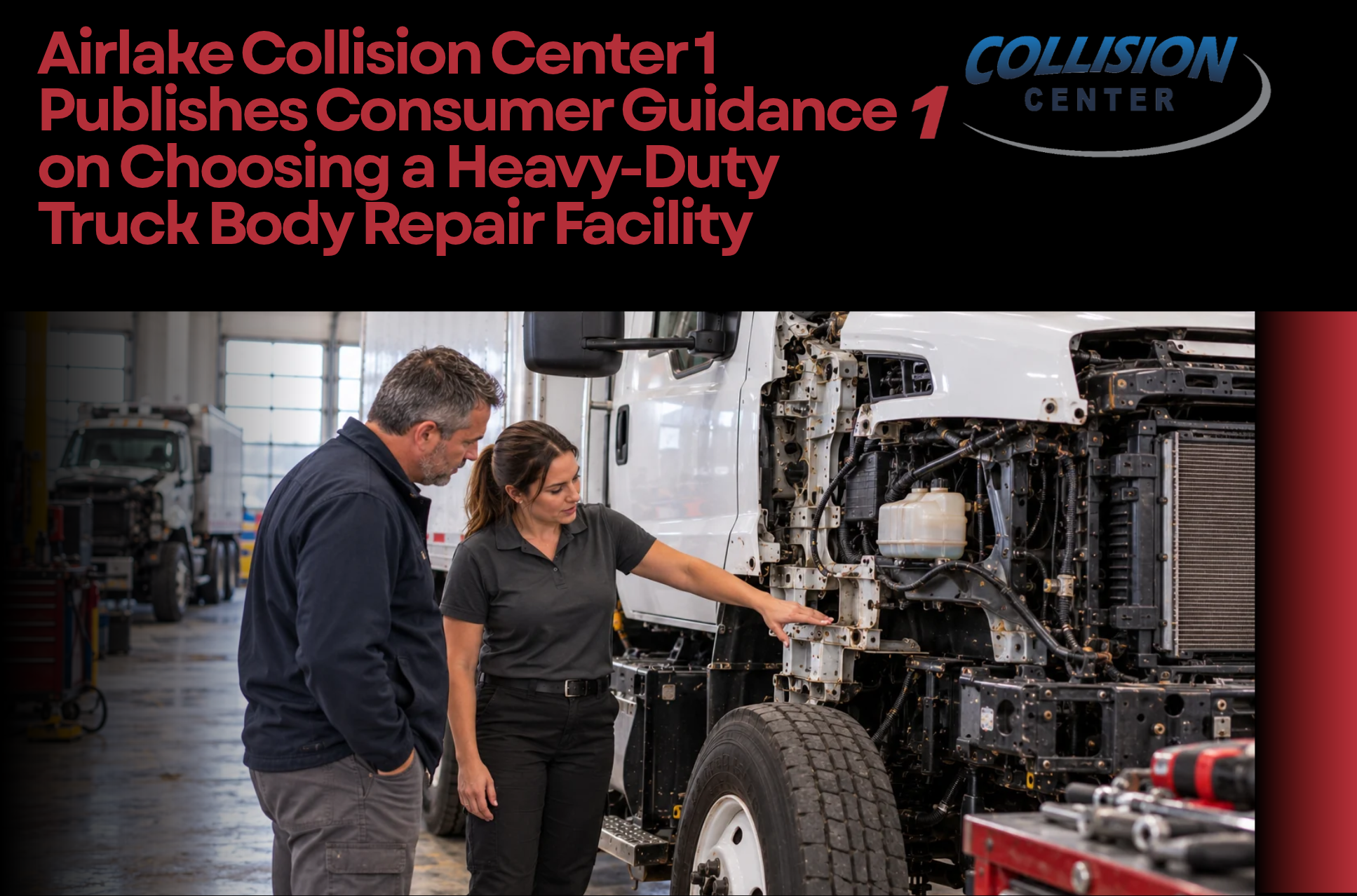
The first consideration is experience with the relevant commercial vehicle class. A shop that handles passenger car repairs may not have the same experience with heavy-duty cab structures, commercial body configurations, or large replacement components. Truck owners should confirm that a prospective facility handles vehicles of similar size and construction.
For example, a side impact involving a truck cab may damage more than the visible door panel. The surrounding opening, hinges, and mounting locations may also require evaluation. A repair facility should be able to explain how it will inspect these areas before finalizing the repair plan.
The second consideration is suitable repair equipment. Large commercial trucks may require different lifting, positioning, measuring, and component-handling arrangements from smaller vehicles. Equipment requirements depend on the truck's dimensions, body configuration, and collision damage.
Truck owners can ask whether the facility has sufficient workspace and appropriate equipment for the vehicle. They can also clarify whether structural measurements, component replacement, or other specialized operations can be completed at the location.
The third consideration involves manufacturer and body-builder repair instructions. Heavy-duty trucks may incorporate different frame designs, cab materials, and attachment methods. Applicable repair information can establish requirements for damaged structural components, replacement parts, and joining procedures.
Some components may have restrictions involving heating, straightening, welding, or sectioning. Methods appropriate for one vehicle may not be suitable for another, even when the visible damage appears similar. Reviewing vehicle-specific requirements helps establish an appropriate repair plan.
The fourth consideration is the damage assessment process. An initial estimate may identify visible dents and damaged exterior panels without revealing concealed structural or mounting damage. Additional inspection or disassembly may be needed before the full repair scope is known.
For example, an impact involving a commercial truck body could affect attachment points beneath an exterior panel. Discovering this damage may require additional repairs and a supplemental estimate. Owners should understand how new findings will be documented and communicated before further work is authorized.
Airlake Collision Center 1 provides heavy-duty truck collision repair services, commercial vehicle collision repair, and fleet vehicle collision repair services for businesses operating commercial trucks and work vehicles. Located at 22096 Canton Cir in Farmington, the facility serves commercial vehicle owners and fleet operators in surrounding Twin Cities communities.
The fifth consideration involves communication and repair documentation. Commercial vehicles are often essential to deliveries, transportation, construction, and other daily operations. Fleet managers may need regular information about repair progress, replacement component availability, and anticipated vehicle downtime.
Repair timelines can change when concealed damage is discovered or necessary components are unavailable. A facility should explain which operations are included in the estimate, how additional findings are handled, and what factors may affect completion. Written records can help fleet managers track authorized work and maintain vehicle histories.
Final inspection practices should also be part of the selection process. Depending on the original damage, verification may include checking cab door operation, exterior panel alignment, repaired structural areas, and affected mounting components. Mechanical or electronic evaluations may also be required when those systems were involved in the collision.
A completed paint finish does not independently establish that all collision-related conditions have been addressed. Commercial truck owners should understand which inspections are appropriate for their vehicle and whether the completed repairs have been documented.
Minnesota's winter conditions add another consideration. Snow, moisture, and road deicing materials can contribute to corrosion when metal surfaces or protective coatings remain exposed. Depending on the repair, restoring corrosion protection may be necessary for affected areas.
The November guidance encourages commercial truck owners to compare repair facilities based on the vehicle types they handle, their ability to assess damage, the procedures used, and the information provided throughout the repair process. These factors can offer a more complete basis for comparison than preliminary pricing alone.
For fleet operators in Farmington and surrounding Twin Cities communities, selecting a heavy-duty truck body repair facility involves both technical requirements and business planning. Understanding the repair process can help operators coordinate vehicle availability and make informed decisions following a collision.
About Airlake Collision Center 1
Airlake Collision Center 1 is a commercial vehicle collision repair facility located at 22096 Canton Cir, Farmington, MN 55024. As part of Collision Center 1, the facility provides heavy-duty truck collision repair, medium-duty truck collision repair, commercial vehicle body repair, and fleet vehicle collision repair services. It serves commercial truck owners and fleet operators in Farmington and surrounding Twin Cities communities.
###
For more information about Airlake Collision Center 1, contact the company here:
Airlake Collision Center 1
Jerald Stiele
(952) 985-5567
jfowler@collisioncenter1.com
22096 Canton Cir, Farmington, MN 55024

