San Francisco ends local funding for new drug-tolerant 'Housing First' sites
PR Newswire
SAN FRANCISCO, July 29, 2026
New city-funded Permanent Supportive Housing will now prohibit illicit drug use, with residents' demand for drug-free options to be surveyed, accommodated over time
SAN FRANCISCO, July 29, 2026 /PRNewswire/ -- Mayor Daniel Lurie today signed legislation authored by District 6 Supervisor Matt Dorsey to end the city's default practice of funding exclusively drug-tolerant "Housing First" models for new Permanent Supportive Housing (PSH) for individuals exiting homelessness. Under the ordinance that will take effect after 30 days, city funding to expand San Francisco's PSH portfolio moving forward will require operators to run site-based residential communities as Drug-Free PSH, where illicit drug use is prohibited and where residents who use illicit drugs may be relocated to a drug-tolerant housing or shelter option. The ordinance will also require a citywide survey of PSH residents to quantify their preferences for drug-free or drug-tolerant housing options, and establish city policy to meet PSH residents' demand for drug-free and drug-tolerant housing moving forward.
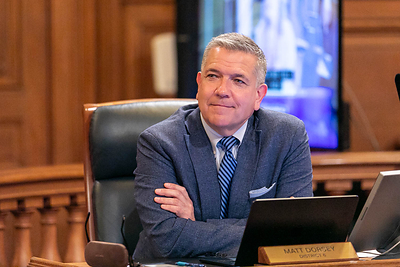
"Our administration is transforming how the city confronts the homelessness and behavioral health crisis," said Mayor Daniel Lurie. "We are not just getting people off the streets; we are helping them achieve long-term stability and recovery by standing up the right kind of housing and connecting them to the services they need. Thanks to Supervisor Dorsey's leadership, San Francisco is expanding and accelerating these critical efforts to keep San Francisco safe and deliver better outcomes for our city's most vulnerable residents."
"This ordinance affirms the right of supportive housing residents themselves to choose a drug-free residential community if that's what they want — and it finally moves us past the arrogant harm-reduction dogma that has too long insisted that the rights of active drug users must take precedence over the rights of everyone else," said Supervisor Matt Dorsey, who has publicly acknowledged his own journey in recovery from drug addiction and alcoholism as an instrumental factor in seeking elective office four years ago. "Drug-free permanent supportive housing options are critically important to the success of many people exiting homelessness — not simply for those in recovery or seeking recovery from addiction, but also for families with children, seniors, or anyone else who simply wants to live in a residential community free of the negative consequences that often accompany rampant drug use. I'm grateful to my fellow recovery community members and our allies who worked with us over two years to craft and advocate for this legislation, which is informed by lived experience and motivated by a shared conviction that abstinence-based recovery saves lives. I am enormously grateful to Mayor Lurie for being such a stalwart ally to the recovery community, and thanks as well to my co-sponsors: Board President Rafael Mandelman and Supervisors Stephen Sherrill, Danny Sauter, Bilal Mahmood, and Alan Wong."
San Francisco's move comes amid a broadly bipartisan reassessment nationwide of Housing First policies, which in California currently prohibit evictions for illicit drug use on site, and require supportive services to be "informed by a harm-reduction philosophy" that recognizes illicit drug use and addiction "as a part of tenants' lives."
In Sacramento, legislation by Assemblymember Matt Haney (D–San Francisco) that sought to amend the state's 2016 Housing First mandate to allow room for drug-free recovery-oriented housing options unanimously passed both legislative chambers last year, before being vetoed by Gov. Gavin Newsom in October 2025. Haney has since returned with a new proposal, AB 1556, that would make drug-free recovery housing eligible for some state funding. It is currently working its way through the legislative process.
Neither San Francisco nor California is alone in its efforts to create drug-free alternatives to drug-tolerant Housing First mandates. Utah — once a national model for Housing First — is now moving to restrict it, with lawmakers drafting drug-free shelter zones and seeking a federal exemption from Housing First funding rules. Oregon has long already recognized drug-free recovery housing as a permanent supportive housing option under state law, while the State of Washington has begun dropping Housing First funding criteria as it adapts to new federal rules. Arizona lawmakers have also introduced legislation creating drug-free zones around homeless shelters.
At the federal level, the U.S. Department of Housing and Urban Development, or HUD, has reoriented its 2026 funding priorities for its Continuum of Care — the federal government's largest homelessness assistance program — away from strictly drug-tolerant Housing First approaches toward drug-free and recovery-oriented options focused on transitional housing, treatment, and self-sufficiency.
Dorsey's legislation emerged from findings that fully 26 percent of citywide overdose deaths between June 2024 and July 2025 occurred in PSH, according to San Francisco's Office of the Chief Medical Examiner — representing a larger share of such fatalities than those found in shelters, hospitals, private homes, or on the street. The legislative findings also cited evidence that many drug-tolerant PSH sites accounted for disproportionately high levels of 911 calls for police service. Some PSH sites generated as many as two police emergencies per day, according to data cited in the legislative findings, with a March 28, 2024 story in the San Francisco Chronicle reporting that one drug-tolerant PSH facility adjacent to the SFPD headquarters was alone responsible for "hundreds of violent and disturbing incidents."
Under the newly enacted ordinance, although Drug-Free PSH will prohibit illicit drug use, it will expressly allow participation in Medication-Assisted Treatment, or MAT, administered by a licensed provider. Unlike "recovery housing" or "sober living environments," the lawful use of legal intoxicants like alcohol or marijuana is not prohibited in Drug-Free PSH. Supporters of the legislation, including Dorsey, argued that the approach would extend to permanent supportive housing residents the option to have the same drug-free residential protections as those found in standard residential leases in California, which according to the U.S. Census already apply to approximately 240,000 renter-occupied households in San Francisco.
Dorsey's legislation will require San Francisco's Department of Homelessness and Supportive Housing, or HSH, in partnership with the City Controller's Office, to survey PSH residents within six months to quantify their interest in drug-free versus drug-tolerant housing, and to report back to the Board of Supervisors on its strategy for meeting that demand. HSH must further adopt rules and regulations — developed through a participatory process with residents and advocates — establishing eviction protocols and support standards for Drug-Free PSH, including a requirement that HSH confirm a resident has been offered alternative housing or shelter before any eviction can proceed.
Apart from Supervisor Dorsey, the legislation was co-sponsored by Board President Rafael Mandelman and Supervisors Stephen Sherrill, Danny Sauter, Bilal Mahmood, and Alan Wong, and finally passed by the San Francisco Board of Supervisors on July 21 by a vote of 7–4.
"Drug-free and recovery-supportive housing options are lifesaving for people seeking to overcome addiction," said Keith Humphreys, Stanford University Professor of Psychiatry, and former White House Senior Drug Policy Advisor in the Obama Administration. "This important reform will also benefit everyone who lives in public housing, giving them the right not to live in a drug-saturated building."
"San Francisco's new legislation in support of drug-free housing is not just common sense, it's also evidence-based and informed by decades of social science research," said Dr. Anna Lembke, Professor and Medical Director of Addiction Medicine at Stanford University School of Medicine, and the best-selling author of Dopamine Nation. "Plain and simple, crime goes down and wellbeing goes up when people are living in drug-free environments. I applaud Supervisor Dorsey and his co-sponsors, as well as Mayor Lurie and his team, for this landmark accomplishment."
"Supportive housing should be a place where people can stabilize, heal, and rebuild their lives — not an environment where open drug use and chaos make recovery nearly impossible," said Steve Adami, Executive Director of The Salvation Army's Homeless Initiative, The Way Out. "Supervisor Dorsey's legislation affirms a basic principle: people living in government- supported housing deserve real options, including access to safe, sober, and accountable communities that promote health, dignity, and long-term well-being. Thanks to the vision and courage of Mayor Lurie, and the leadership of Supervisor Dorsey, the Board of Supervisors, and the recovery community. San Francisco is taking an important step to prioritize recovery and address the root causes of San Francisco's drug and homeless crisis."
"Every person deserves the opportunity to live in a community where sobriety, safety, and accountability are protected —not compromised," said Cedric Akbar, co-founder of Positive Directions Equals Change, a drug treatment program, and an elected member of San Francisco's Democratic County Central Committee. "This legislation recognizes that recovery is not simply about treatment; it's about creating environments where people can heal. We commend Mayor Lurie, Supervisor Dorsey, and the Board of Supervisors for advancing a policy that puts the long-term wellbeing of San Francisco residents at the center of our homelessness response."
"Residents in recovery should not be required to live in environments where active drug use is present — and doing so makes sustained sobriety extremely difficult and undermines recovery efforts," read a joint statement from Brothers Against Drug Deaths (BADD) co-founders, Theris L. Coats, Sr., Chief Executive Officer, and Richard Beal. "BADD supports expanding access to drug-free housing options that provide safety, dignity, and real choice for individuals seeking recovery. Every person deserves a living environment that supports healing, not one that works against it. This legislation helps create a more balanced housing system by offering greater hope and stability for those working toward lasting recovery."
"Recovery is about community, and in order to stay drug-free you need a community that supports the same idea," said Cregg Johnson, director of TRP Academy (for Treatment, Recovery and Prevention), a Tenderloin-based, peer-led, abstinence-based therapeutic teaching community and transitional housing program. "It's hard for someone in recovery to thrive in a community where drugs are being used. I'm talking about a person's safe space — where they live — what goes on in the streets needs to stay in the streets."
"Too often, families like ours have watched loved ones enter recovery only to be placed in environments where drugs are all around them — and this legislation changes that," said Gina McDonald, co-founder of Mothers Against Drug Addiction and Death, or MADAAD. "We are deeply grateful that people newly in recovery will finally have a safe, drug-free place to heal, rebuild, and reclaim their lives. Our thanks go to Supervisor Dorsey for his leadership in making this possible — every family fighting for a loved one's recovery deserves the hope this gives us."
"Drug-Free Supportive housing legislation in San Francisco sends a strong message to other West Coast cities that allowing drug use in supportive housing has largely defeated the purpose for which supportive housing was created: to help people get healthy and rebuild their lives," said Tom Wolf, recovery advocate. "I'm grateful to Supervisor Dorsey, the Board of Supervisors, Mayor Lurie and the recovery community for their continued leadership and commitment to this critical issue."
Contact: BRYAN DAHL
Bryan.Dahl@sfgov.org
+1 (415) 554-7969 w
 View original content to download multimedia:https://www.prnewswire.com/news-releases/san-francisco-ends-local-funding-for-new-drug-tolerant-housing-first-sites-302837923.html
SOURCE San Francisco Supervisor Matt Dorsey


